
How to Heal a Herniated Disc

One of the most common problems people come to see us with are intervertebral disc injuries.
Disc injuries can take many forms and are often termed ‘slipped’, bulging, or herniated. They are a common cause of back pain and pain that shoots down the legs (sciatica). Disc injuries are most common in people who are aged between thirty and fifty, with men being twice as likely as women to suffer one. While a disc injury sounds frightening and can be extremely painful, research shows that the human spine has a remarkable, natural ability to repair itself and recover completely without surgery; in fact, 80-90% of all disc injuries resolve without surgery or other invasive procedures.
Understanding how discs heal, why recovery takes time, and what actions help or hurt can guide you through a successful recovery.
The Healing Process: How Your Body Cleans Up a Disc Injury
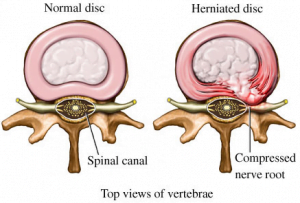 To understand how a disc heals, it helps to look at its anatomy. A healthy disc is like a jelly donut: a tough outer ring of cartilage (annulus fibrosus) surrounds a soft, gel-like center (nucleus pulposus).
When a disc is injured by sudden strain or repetitive wear, the outer ring tears, allowing the inner gel to push outward or squeeze into the spinal canal.
When this gel leaks out, the body treats it like an intruder. Normally, the inside of a disc is completely hidden from the immune system. Once the gel leaks, it triggers a powerful natural cleanup process;
- The immunological alarm: The leaked gel releases chemical warning signals. While these chemicals irritate nearby nerves and cause pain, they also act like a flare gun telling the body’s cleanup crew to report to the scene.
- Macrophage infiltration (the cleanup crew): Specialised immune cells called macrophages rush to the area. They physically swallow, digest, and break down the leaked disc tissue piece by piece.
- New blood vessel growth: To fuel this heavy-duty cleanup, the body sprouts tiny new blood vessels around the injury. These vessels deliver fresh oxygen, nutrients, and waves of immune cells.
- Enzymatic breakdown: The body releases specific enzymes that systematically shrink and dissolve the remaining herniated tissue over several weeks or months.
Clinical studies confirm that a large majority of lumbar disc herniations shrink or disappear entirely on their own over time, matching up with a total disappearance of pain.
Why Disc Healing Takes Time

Patients often find recovery frustratingly slow. The physical and biological nature of the spine explains why tissue restoration requires patience:
- Poor blood supply: Healthy adult discs lack a direct blood supply. Instead, they rely on a slow, passive filtering of nutrients through neighbouring bones. Because this delivery system is slow, disc cells repair themselves much more slowly than muscles or skin.
- Constant gravity and movement: Gravity, sitting, standing, bending, and twisting place continuous pressure on your spine. Managing these forces is tricky because your spine has to keep supporting your body while it is trying to heal.
- The double-edged sword of inflammation: The chemical environment required to dissolve and clear away the leaked disc fragment relies on inflammation. Unfortunately, those exact same chemicals can irritate nearby nerve roots, meaning pain can linger even while your body is successfully fixing the problem.
How to get a disc injury to heal quickly
In our experience every disc injury is different, the healing time and resolution process will be specific to the person who has suffered it. However, there are things that can be done to ensure the process is as short as possible.
What to Do: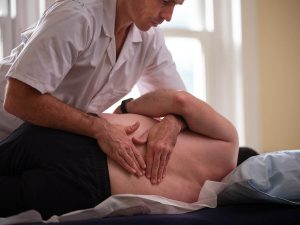
- Get Help! Guided Physical/Manual Therapy: Once severe flare-ups calm down, getting some structured rehabilitation and if possible, some manual therapy can build core strength, restore pain-free movement, and teach you how to protect your healing spine.
- Try to be ‘restfully active’ Complete inactivity leads to muscle loss and stiffness. Short, frequent walks boost circulation and deliver vital nutrients to the spine and keeping gently mobile throughout the day will also help this process.
- Education and reassurance: Understanding that your body is designed to heal reduces fear, which clinical studies show actually lowers pain perception and speeds up recovery.
- Get pain relief: If the pain is too much to cope with then under medical guidance, anti-inflammatory drugs (NSAIDs) can help control acute pain so you can stay mobile and participate in physical therapy.
- Eat and drink well: Eat omega-3s (salmon, walnuts), berries, and leafy greens to keep irritation in check, make sure you are getting enough Vitamins C and D, zinc, and magnesium to support tissue repair. As discs are made up of gel-like substances drinking enough water can help them retain their structural integrity and speed up the nutrient transfer crucial for their healing
 What NOT to Do:
- Prolonged bed rest: Resting for more than 48 hours weakens your muscles, decreases spinal stability, and slows down recovery.
- Heavy lifting and twisting: Heavy weights and rapid twisting place massive stress on the outer ring of the disc and must be strictly avoided during the early stages of recovery. The combination of flexing and twisting together with added weight is especially problematic (imagine lifting a heavy box that has been placed beside one of your feet). If you must lift heavy items keep them close to your body and turn using your feet, not your back.
- DO NOT SMOKE: Smoking slows disc healing primarily through vasoconstriction (narrowing of the blood vessels caused by nicotine). Because spinal discs already have a very poor natural blood supply, restricted circulation starves the injured tissue of the vital oxygen and nutrients it needs to repair. It also limits the flow of immune cells required to clean up and dissolve the herniated disc material, dragging out the overall recovery process.
- Sustained Sitting: Sitting puts significantly more pressure on the back of the discs, where most injuries occur, than standing or walking. Take regular breaks to stand up, stretch, and adjust your posture.
Recovery from a disc injury can be slow and frustrating, but understanding why it takes time, what you should and shouldn’t do, and getting help from a professional can make the process as smooth as possible.
At Align Body Clinic, we have helped hundreds of people recover from disc injuries and return to active, full lives.
Are you in a lot of pain and want to get better as soon as possible? If so, book in for a new-patient consultation with treatment.
Not sure we can help with your symptoms? Why not take advantage of our new patient assessment introductory offer to get you started towards a tailor-made recovery plan for only £19.
References
- LaxmaiahManchikanti etal; An Update of Comprehensive Evidence-Based Guidelines for Interventional Techniques in Chronic Spinal Pain. Part II: Guidance and Recommendations. Pain Physician 2013; 16:S49-S283 • ISSN 1533-3159
- Al Qaraghli, M. I., & De Jesus, O. (2023). Lumbar disc herniation. StatPearls Publishing. Link
- Golubović, J., et al. (2024). Spontaneous resorption of lumbar disc herniation: A narrative review of pathophysiological mechanisms and clinical predictors. MDPI, 7(2), 30. DOI
- Parwani, S., et al. (2025). Study of causes, symptoms, and diagnosis of lumbar disc herniation. CME Geriatric Medicine, 1073. Link
- StatPearls. (2025). Disk herniation. StatPearls Publishing. Link