
Can Osteopathy Help With Sciatica?
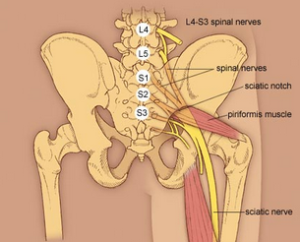 If you are dealing with sharp, shooting pain down your leg, numbness, or weakness when sitting or walking, you are likely experiencing sciatica. Sciatica isn’t a condition itself, but a term for irritation or compression of the sciatic nerve (the longest nerve in your body).
What Causes Sciatica?
Sciatic nerve irritation typically stems from one of four common issues in the lower back and pelvis:
- Disc Bulge or Herniation: Pressure or inflammation from a spinal disc compressing the nerve root (most common in ages 25–45).
- Facet Joint Irritation: Inflammation in the small stabilizing joints of the spine, referring pain down the thigh.
- Piriformis Syndrome: Tightness or spasm in the piriformis muscle in the buttock compressing the nerve.
- Spinal Stenosis: Age-related narrowing of the spaces through which nerves travel (most common in adults over 50).
What the Evidence Says about treatment of sciatica
UK clinical guidelines from NICE (National Institute for Health and Care Excellence) recommend manual therapy, including spinal mobilisation and soft tissue manipulation (massage) combined with tailored exercise as a leading approach for managing sciatica. All of which osteopaths are experts at providing.
 Why Choose an Osteopath?
Many people don’t realise that osteopaths in the UK are Allied Health Professionals (AHPs), a healthcare designation recognised alongside physiotherapists and radiographers by NHS England.
Crucially, osteopaths are statutorily regulated by law under the General Osteopathic Council (GOsC), maintaining strict professional and ethical standards in the exact same legal framework as medical doctors (regulated by the GMC). When you see an osteopath, you are consulting a highly trained, university-educated primary healthcare professional equipped to safely assess, diagnose, and treat musculoskeletal conditions.
How We Treat Sciatica at Our Bath Clinic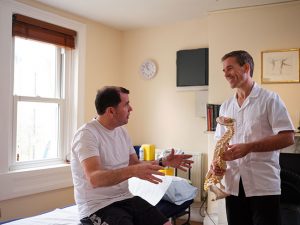
At Align Body Clinic, our focus is on finding out why the nerve is irritated rather than just masking the symptoms. Your treatment plan typically includes:
- Targeted Assessment: Neurological and orthopaedic testing to pinpoint the exact source of compression and rule out underlying issues (referral for imaging if needed).
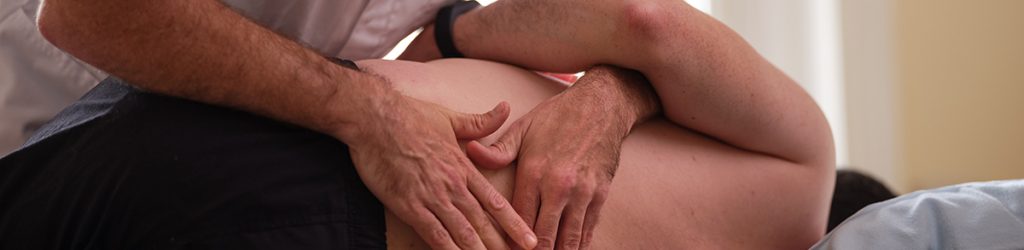
- Gentle Hands-On Therapy: Joint mobilisation, traction, and soft-tissue techniques to reduce physical pressure on the nerve and improve spinal mechanics.
- Tailored Exercise Rehabilitation: Simple, targeted stretches and core stability exercises to promote long-term recovery and prevent future flare-ups.
Our expert osteopaths in Bath have over thirty years of experience in helping people get rid of their sciatic pain.
⚠️ When to Seek Immediate Emergency Care
If your sciatica is accompanied by loss of bowel/bladder control, numbness around your genitals/buttocks, or severe, rapidly worsening weakness in both legs, seek immediate medical attention at an A&E department, as these can indicate Cauda Equina Syndrome.
Get Back to Moving Comfortably
You don’t have to live with severe leg and back pain. Early assessment leads to faster, more effective recovery.
Are you in a lot of pain and want to get better as soon as possible? If so, book in for a new-patient consultation with treatment.
Not sure we can help with your symptoms? Why not take advantage of our new patient assessment introductory offer to get you started towards a tailor-made recovery plan for only £19.